Book Review: Good Wives (New England, 1650 – 1750)
I co-wrote the biography of my Irish great-great grandmother, Harriet Susannah Ellis. She was born was born in Ireland’s Co. Sligo the day the U.S. Union Army reorganized during the U.S. Civil War. She married in Dublin the year James Joyce was born in that city. Stories survive of her reading turn-of-the-century news articles about the Boer War to an illiterate neighbour. Harriet spent forty years raising children with a blind spouse. She emigrated the year after the Titanic sank. She died the day the Soviets invaded Poland.
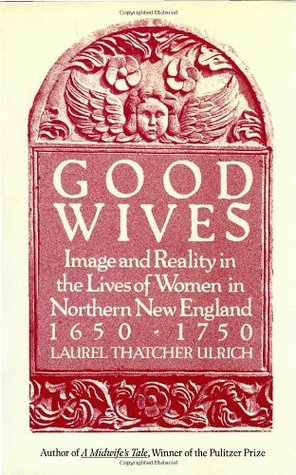
I find nourishment in reading about what everyday life was like for women in historical contexts. I appreciate it when writers sift through historical records, piecing together sociological aspects – portrayals – of what women’s lives were like in specific regions and time periods. I have a number of such books on my bookshelf at home. I recently purchased another of these sorts of books – Laurel Thacher Ulrich’s Good Wives: Image and Reality in the Lives of Women in Northern New England, 1650-1750.
As I read Good Wives: Image and Reality in the Lives of Women in Northern New England, 1650-1750, I am finding what I hoped for in this book:
- There is some information I’ve read before about the demographics of historical women. For example, women often married younger in New England than in Europe (18 – 20 vs. early 20’s).
- Families often had household servants (actually one of my great-grandmothers – when she was 13 – went to work as a household servant for a doctor’s family in Ontario when her father died in an industrial accident). While many of us wouldn’t imagine affording household servants these days (though some people have child care or part-time house chore services), I can see that household servants would have made sense historically – households didn’t use to have the myriad of labor-saving devices we have today.
- I appreciate my life today. Laurel Thatcher Ulrich reminds us that women in New England historically couldn’t own property. When their husbands died, they could “inherit” a portion of their husband’s estate (if their children were still at home when their husband died, they often had full use of the estate while the children remained at home) – whereas today we women become the sole owner of marital assets upon the death of a husband.
- Historically, families and communities in the Western world didn’t think about personal autonomy in the way we do today – people’s lives were viewed as socially interwoven with one another.
This book profiles several women of Colonial America (New England, 1650 – 1750). I look forward to learning about these women during my evening reading. I may also order the author’s book she wrote based on the diary of a historical midwife.
Bibliophile and would-be-antiquarian Kim Burkhardt reviews books at The Books of the Ages and at The Hermitage Within. If you are a new visitor, it would be great to have you follow this blog (thank you!). If you know someone who would like this blog, please share it with them (thank you!). FYI, you can $$ support this blog by clicking here here to do your Amazon shopping (if you click here before you start your Amazon shopping, Amazon pays us a commission when you shop via the link provided – thank you).