Book Review: “We the Women”
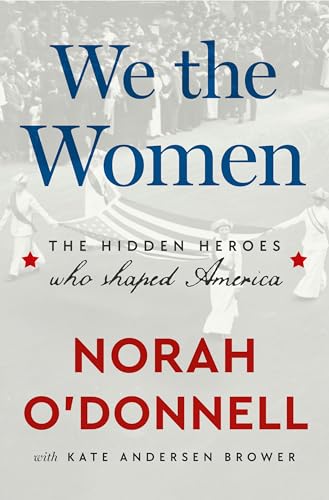
Book: We the Women

I am familiar with Norah O’Donnell from her role as a national newscaster.

I heard a radio interview several weeks ago in which Nora O’Donnell was talking about her new book titled We the Women: Hidden Heroes Who Shaped America. I was generally interested in the interview and the book for two reasons: I like Norah O’Donnell and I already have two other books on related topics. The two related books I have are Cokie Robert’s book Founding Mothers: The Women Who Raised Our Nations and Bonnie Angelo’s Fist Mothers: The Women Who Shaped the Presidents (I reviewed those two books here).

As I listed to Nora Roberts’ radio interview, I was hooked when she said that the printer who printed the U.S. Declaration of Independence was a woman – a woman who, as the printer, signed her name on the document. I wanted to know more about that woman. I ordered the book.

As I have started reading this book, I appreciate the tenacious research Nora O’Donnell – and, presumably, her co-author Kate Andersen Brower – did to find and learn about the women profiled in this book. I don’t recall hearing about these historical women in school (except Eleanor Roosevelt) – we likely didn’t hear about them. I was surprised to learn in the early part of the book that as our nation was heading toward the Revolution that we had a recognized black poet who compared Britain’s oppression of the colonies to slavery. I was surprised to learn that our first postmaster was an unmarried woman. Several of the signers of the Declaration of Independence knew – and interacted with – some of these women. I’m looking forward to more discoveries as I continue reading the book.

One of the noticeable structural features of We the Women: Hidden Heroes Who Shaped America is that its’ profiling of multiple historical women – 35 in all – makes it easily accessible to readers who wish to take in one historical person at a time. This book can be set out on a coffee table, inviting guests to learn about as many or as few of the book’s profiled individuals as the reader has time for in one sitting.

This book – and the other books mentioned above – are helping to broaden a fuller public understanding of the people – ALL THE PEOPLE – who were involved in shaping our nation. Hats off to the likes of Norah O’Donnell and Kate Andersen Brower who put in the effort to bring this information into the public sphere.. These books are a step toward making it sociologically natural to recognize both women and men’s contributions to our nation and society. I am glad that I am going to have this book on my bookshelf.

Bibliophile and would-be-antiquarian Kim Burkhardt reviews books at The Books of the Ages and at The Hermitage Within. If you are a new visitor, it would be great to have you follow this blog (thank you!). If you know someone who would like this blog, please share it with them (thank you!). FYI, you can $$ support this blog by clicking here here to do your Amazon shopping (if you click here before you start your Amazon shopping, Amazon pays us a commission when you shop via the link provided – thank you).
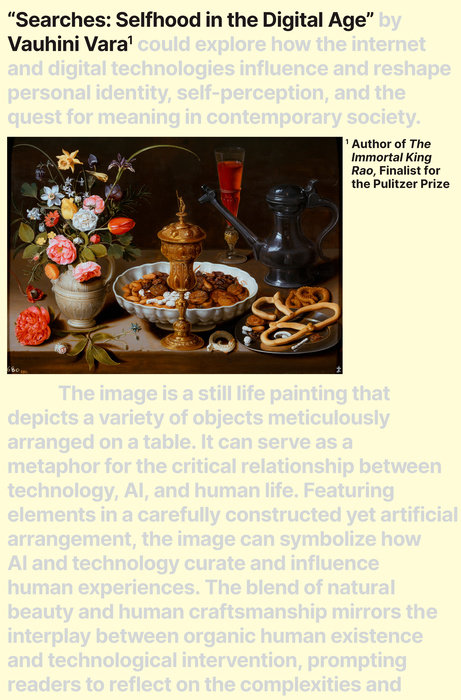
Book Review: Searches – Selfhood in the Digital Age

Book: Searches - Selfhood in the Digital Age
Searches: Selfhood in the Digital Age

Occasionally, a sociological book comes along that effectively captures the Zeitgeist of people and society within the scope of current events. These books articulate our experience such that we want to read these books. Vauhini Vara’s Searches: Selfhood in the Digital Age (2025) is one of those books.

When I recently saw this title on Publisher’s Weekly, the book’s title made the subject and its’ sociological relevance in today’s digital age immediately self-evident. It wasn’t until the last two to three decades that we could – in the course of human history – find bread crumbs of our own thoughts-experience-lives-searches-postings-etc. (lives!) and the collective experience of everyone who ever goes online (i.e., “everybody,” essentially) “on the internet.” Our individual and collective search histories are cumulatively aggregated online. A dream for sociologists and marketers.

Relevant example #1: When I started reading Searches: Selfhood in the Digital Age, the author self-disclosed that she looked back at her own Google search history over several years and at her Google account. Based on her cumulative search history, Google had accurately figured that she’s a married high-income-earner with a child. Google had also assumed that she works in tech because she does so many searches about the tech industry; in that case, Google was mistaken….. Similarly, many people complain about targeted search engine advertising based on one’s search history (when you search for shoes, your search engine starts showing you advertisements for shoes….) and/or that “Google probably knows where I live…..” Then, there are the less-common tech privacy geeks like me who literally clear my cache and search history between EVERY search. I never get online advertising as there’s no cumulative history for search engines to use to identify my interests or life-trends (although the contours of my life could likewise be privately inferred by scanning the content of my email history…..).

Relevant example #2: When I want to tweak one of my websites to make the content relevant for the people who I want searching for my website, I go to Google Trends and look up society’s collective search histories from 2004 to the present to find which topical words and/or phrases – relevant to my website(s) – people are currently searching. Ditto when I periodically pay for online advertising. Then, I populate my website(s) or advertising with relevant search terms that match what people are searching for so I can make my content relevant to the people with whom I am looking to connect.

I am glad that Vauhini Vara had the insight to write this book (extra bonus: I learned in the book that she and I have lived in several of the same cities). I appreciate having this book be part of our collective reading for sociological naval-gazing.

Bibliophile and would-be-antiquarian Kim Burkhardt reviews books at The Books of the Ages and at The Hermitage Within. If you are a new visitor, it would be great to have you follow this blog (thank you!). If you know someone who would like this blog, please share it with them (thank you!).