Book Review: The Lost Mary, Rediscovering the Mother of Jesus
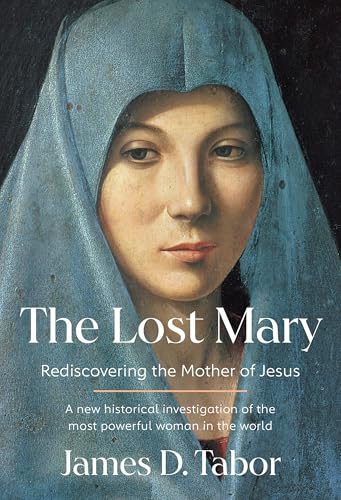
When I happened upon a blurb about this recently-published book, I checked to see if my local library has it. I was pleased to find out they had a copy and I checked it out. In amongst my other reading, I found time to read the first few chapters of the library copy before it came due; I couldn’t renew it as other patrons have holds on the book. I’ve found The Lost Mary – Rediscovering the Mother of Jesus to be thought-provoking enough to want my own copy.
Fortunately, the timing of this book’s recent publication dovetails nicely with my master’s in theology studies. We had learned in class that much of what we know about Mary comes from “The Gospel of James (or the Protoevangelium of James).” ….. It’s widely known that there are four “canonical gospels” – the gospels of Matthew, Mark, Luke, and John that are in the Bible. In addition to the four canonical gospels, there are other gospels – some of which are “heretical” and others that are not heretical….. I learned in my studies that the “non-heretical, non-canonical” gospels are read by the church and religious scholars to provide “supplementary history” that enrich what we know from the four canonical gospels. Rabbit hole – this lead to me ordering Robert J. Miller’s book The Complete Gospels and I read “The Gospel of James (or the Protoevangelium of James).” In the Protoevangelium of James, I discovered that Mary’s parents (Joachim and Anna) were wealthy and that Joseph functioned as more of a guardian than a spouse to Mary. I was curious to learn more.
Then, I came upon James D. Tabor’s book The Lost Mary – Rediscovering the Mother of Jesus.
What I find intriguing about this book is that the author – James D. Tabor – goes beyond what we commonly know today about Mary life to consider the historical context of her life. What was it like historically for Mary to be living in Judea at the time that she lived? Tabor looks into topics – and ponders to the sociological impact on Mary’s life of what was happening at the time – the daily details of Roman conquest, a description of the town where her parents were likely living when she was born, Joseph needing to look for a Hebrew midwife when Mary went into labor, the idea that Jesus likely visited his wealthy maternal grandparents when he was a child, etc. It’s never occurred to me to ponder Jesus’ childhood visits with extended relatives and other day-to-day aspects of Jesus and Mary’s lives. Therefore, I am finding it insightful to consider the ideas presented in this book. Does writer and historian James D. Tabor accurately figure out every possible aspect of Mary’s life? Who knows. Even if Tabor goes down some tangents that may be open for debate, Tabor is raising points that broaden and enrich the reader’s understanding of the teenager who gave birth to Jesus.
I am looking forward to having my own copy of this book that I can keep on my bookshelf as a reminder that we should want to know more about the life of Mary.
Bibliophile and would-be-antiquarian Kim Burkhardt reviews books at The Books of the Ages and at The Hermitage Within. If you are a new visitor, it would be great to have you follow this blog (thank you!). If you know someone who would like this blog, please share it with them (thank you!).