Book Review: Fathers of the Church (A Comprehensive Intro)
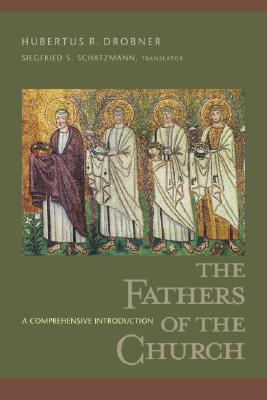
I have been looking for three of four years for a good history of early Christianity and for insightful information about the early centuries of “Early Christian Literature” (i.e., Christian writings written after the canonical New Testament with differentiations between and explanations about church-accepted mainstream Christian writers vs. heretical literature). I have found both in Hubertus R. Drobner’s book, The Fathers of the Church – A Comprehensive Introduction.
This book provides 579 pages of academic content detailing Christianity’s first seven hundred years followed by a supplementary bibliography at the end of the book. The Fathers of the Church outlines church history as it topically introduces the Patristic Fathers (i.e., the early church leaders who were foundational in building the church) and the Christian literature that was written following the canonical New Testament. Topical entries are provided covering Western Christianity, the Eastern Church, and supplementary topics outside the direct scope of Christianity itself. Each entry is covered chronologically and by topic, providing a broadly insightful timeline of Christian history.
In addition to the supplementary bibliography at the end of the book, extensive endnote citations are provided throughout the book for each topical entry. By the time I read through the first ~70 pages, I knew that I will be keeping this book. This book provides great information in its’ own right and provides such extensive bibliographic reference data as to be a useful reference tool.
The Fathers of the Church is proving to be a useful supplement to my studies for a Master’s in Theology. I am more educated as a result of reading this book. I recommend the book for anyone who wants a knowledgeable overview of Christian history and a one-stop source of bibliographic reference covering Christianity’s first seven centuries.
This is a book that can be read either straight through or as a reference book that one picks up occasionally. Readers who thumb through it as a source of occasional reference would benefit from giving it an initial “glance through” to get a broad overview of church history.
The author of The Fathers of the Church, Hubertus R. Drobner, has written multiple books about early Christianity. Goodreads provides a listing of his publications here.
FYI, I have also found the online edition of Britannica to be a credible and useful resource for learning about specific topics of church history (Academia concurs. University access to professional databases includes – at least at some schools – access to the pay-to-read sections of Britannica).
Bibliophile and would-be-antiquarian Kim Burkhardt reviews books at The Books of the Ages and at The Hermitage Within. If you are a new visitor, it would be great to have you follow this blog (thank you!). If you know someone who would like this blog, please share it with them (thank you!). FYI, you can $$ support this blog by clicking here here to do your Amazon shopping (if you click here before you start your Amazon shopping, Amazon pays us a commission when you shop via the link provided – thank you).