Book Review: “Light from Light” (Nicene Creed)

I have blogged elsewhere about two books I have previously read about the Christian – Catholic – creeds (check out that previous blog post here).

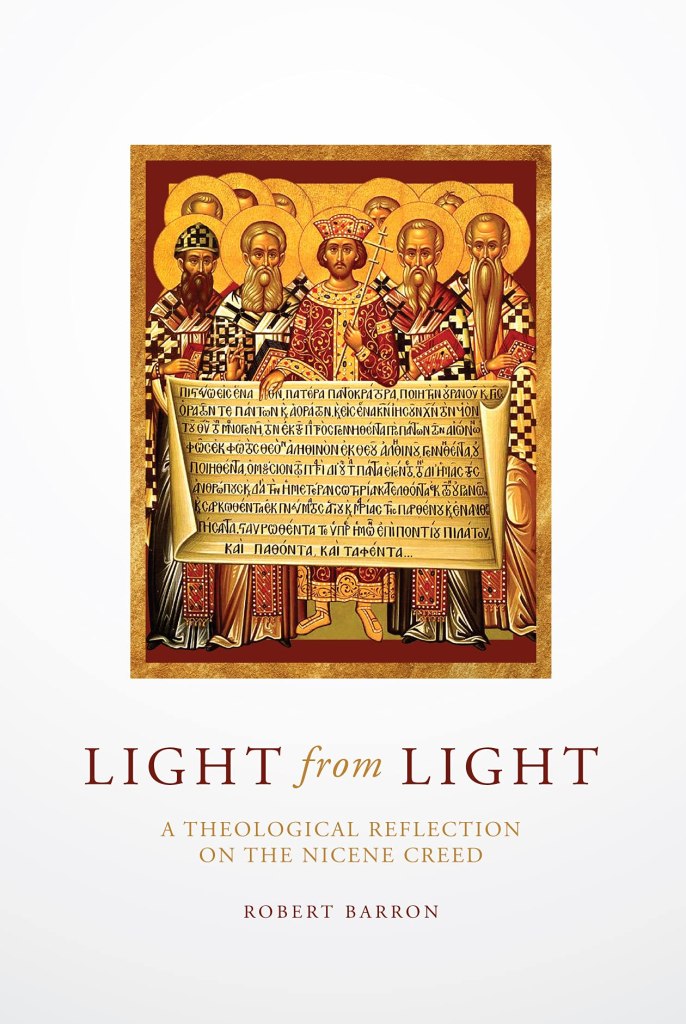
Now, my Master’s in Theology program has us reading Bishop Robert Barron’s Light from Light book that does a deep into the Nicene Creed.

For anyone not familiar with the Nicene Creed, it was formulated by a body of bishops in the year 325 at the Council of Nicea in what is now Turkey (“I believe in one God, the Father almighty….light from light, true God from true God…..”).

While I have already read other books on the Nicene Creed and the Apostle’s Creed (the two creeds are quite similar in content), I still find it insight to periodically read another book on the subject when the book is well written. Knowledgeable and capable writers can each bring their own collection of insights to the topic – offering useful reading at varying stages in our lives.

I am currently mid-way through chapter one of Robert Barron’s Light from Light. I have already found items to highlight – points that I find insightful at my current stage in life. For example, Robert Barron states on page 22 “authentic faith or belief has not a thing to do with naive credulity or accepting claims on the basis of no evidence. Faith, in a word, is never below reason, never infra-rational. The Church has absolutely no interest in encouraging superstition or intellectual irresponsibility.”….”Newman insisted on the intellectual integrity of faith.”

I encourage anyone who wants to practically understand Christianity’s core beliefs to read any of these books on Christianity’s creeds. It’s easy enough to think we are familiar with Christianity (in varying degrees, most people have some-to-more-than-some knowledge about Christianity). Barron’s Light from Light and the other “deep dive into the creed” books I reviewed (above) get into the nitty-gritty in ways that increase one’s understanding in useful ways.

Bibliophile and would-be-antiquarian Kim Burkhardt reviews books at The Books of the Ages and at The Hermitage Within. If you are a new visitor, it would be great to have you follow this blog (thank you!). If you know someone who would like this blog, please share it with them (thank you!). FYI, you can $$ support this blog by clicking here here to do your Amazon shopping (if you click here before you start your Amazon shopping, Amazon pays us a commission when you shop via the link provided – thank you).
Book Review: In the Heart of the Desert

In the Heart of the Desert
Book: In the Heart of the Desert

In the early centuries of Christianity, Christians seeking solitude and a focused relationship with God would sometimes head into the desert in small groups or as individual hermits – particularly into North Africa and Palestine. Enough ascetics did this at the time that non-hermits in villages and cities knew of this phenomenon. People would sometimes head into the desert to seek spiritual counsel from the desert dwellers. Some desert dwellers graciously provided this spiritual counsel. In other instances, visits from people seeking counsel (counsel of even just one word!) would drive the desert-living ascetics deeper into more isolated regions of the desert to more fully find the isolation they sought.

As people sought desert wisdom from the ascetic monastics, word spread throughout the region of the wisdom communicated by the self-isolating followers of God who were living in the desert. Quotes and phrases were shared and quoted by visitors to the desert monastics that developed into something of a a collective body of wisdom.

I discovered in reading In the Heart of the Desert: The Spirituality of the Desert Fathers and Mothers by John Chryssanvgis that any number of books have been written over the subsequent centuries about the lives, faith, and wisdom of these ascetic desert dwellers from early Christianity. In this particular book, Goodreads aptly describes the books’ content as “Words of spiritual counsel from the heart of early Christian monasticism.” For readers interested in reading more about desert mothers and fathers, In the Heart of the Desert provides a useful bibliography directing readers to additional books on this subject.

As an aside, one of my previous entries on another blog pondered the perceived relationship between types of geography – such as deserts – and how we perceive spiritual pursuits. That blog post can be read here.

Bibliophile and would-be-antiquarian Kim Burkhardt reviews books at The Books of the Ages. If you are a new visitor, it would be great to have you follow this blog (thank you!). If you know someone who would like this blog, please share it with them (thank you!).

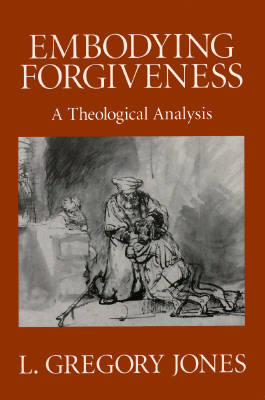
Book Review: Embodying Forgiveness

Book: Embodying Forgiveness

This book, Embodying Forgiveness by Methodist pastor L. Gregory Jones, makes forgiveness more possible by demonstrating its’ theological necessity. Therefore, this is an important grow-my-faith book for individuals committed to truly living their faith. The book challenges readers to grow in ways that can be uncomfortable (growth that’s challenging to achieve can move us with particular stride along the long-haul journey of genuine maturing in faith).

This is a book that must be read slowly. The concepts presented grab a reader’s attention such that one must pause to take in the book’s ideas, find the emotional capacity to live each aspect of the book’s insights.

Sample excerpts include:

  • “….people are mistaken if they think of Christian forgiveness primarily as absolution from guilt. The purpose of forgiveness is the restoration of communion [between parties] (page five).”
  • “Christian forgiveness involves a high cost, both for God and for those who embody it. It requires the disciplines of dying and rising with Christ, disciplines for which there are no shortcuts, no handy techniques to replace the risk and vulnerability of giving up ‘possession’ of one’s self, which is done through the practices of forgiveness and repentance. This does not involve self-denial, nor the ‘death’ of self through annihilation. Rather, it is learning to see oneself and one’s life in the context of communion [i.e., community] (pages 5-6).”

A worthwhile read!

Kim Burkhardt blogs at The Books of the Ages and A Parish Catechist (and a “Content Creator/Individual” member of the Association of Catholic Publishers). If you are a new visitor, it would be great to have you follow this blog (thank you!). If you know someone who would like this blog post, please share it with them (thank you!).

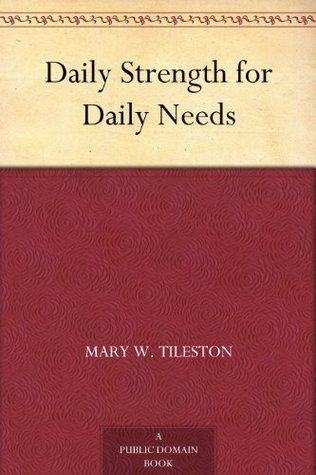
Book review: Daily Strengths for Daily Needs

Thank you to The Books of the Ages friend Karen Chartier for this book review. Much appreciated!

Book Review: Daily Strengths for Daily Needs

Mary W. Tileston

The Family Inspirational Library

Copyright 1928

Mary Tileston’s book Daily Strengths for Daily Needs offers a compilation of quotes from thoughtful, spiritual thinkers throughout the ages, from those found in the Bible to R.W. Emerson, to Marcus Antoninus, to George Elliot, to St. Frances de Sales — and scores of others.

Published first in 1884, it remains pertinent to the present. ‘In these days of great emotion and radical changes, we need the steady, persistent and refreshing inspiration of spiritual thoughts, which, entering the texture of our life in the morning, will guide and refresh us through the day, or, in the evening, give a sense of confidence and peace.’ opens the preface, and both the need and the outcomes outlined are relevant.

I was given this book by a friend and have been inspired by it throughout the year. I highly recommend it. Below are examples of quotes of Tileson’s book.

The one who will be found in trial capable of great acts of love, is ever the one who is always doing considerate small ones.          F. W. Robertson

A man is relieved and gay when he has put his heart into his work and done his best; but what he has said or done otherwise, shall give him no peace.                   R. W. Emerson

We may, if we choose, make the worst of one another.  Everyone has his weak points; everyone has his faults; we may make the worst of these; we may fix our attention constantly upon these.  But we may also make the best of one another.  We may forgive, even as we hope to be forgiven…By loving whatever is loveable in those around us, love will flow back from them to us, and life will become a pleasure instead of a pain; and earth will become like heaven; and we shall become not unworthy followers of Him whose name is Love.                      A. P. Stanley

Book Reviewer: Karen Chartier