Book Review: The Shadow of the Wind

Book: The Shadow of the Wind
The Shadow of the Wind

I came upon Carlos Ruiz Zafon’s The Shadow of the Wind during COVID. I was out walking one day (alone, of course, there was a pandemic on….) and stopped at a Little Free Library in North Seattle. I went home with a whirlwind of a psychological thriller that captivated my imagination for weeks.

The Shadow of the Wind is set in Barcelona in 1945. This novel is wonderfully about books. And about people. And Barcelona. And, psychological suspense.

In this book, the writer manages to keep much in “the shadows” throughout the book – no way to “catch the whodunnit.” We are taken on the wind through the suspense of plot. Bottom line, Carlos Ruiz Zafon knows how to write.

This novel is dark. I attest to the author’s ability to write – the novel’s darkness took me into the depths of a dark despair. However, I couldn’t put the book down. When I had started reading a different book (several years earlier) that also led me into the depths of despair, I donated that other book to the library to get it out of my house rather than continue reading it. This book, however, doesn’t provide that option. I was so emotionally drawn into the book that I had to continue reading it. When I got to the end of the book, I was glad to have read it.

I’m looking forward to when I’ve forgotten enough details of the book that I can read it again. When I read it again, I’m going to be prepared for the depths to which the book takes the reader. The Shadow of the Wind is a must-read.

Bibliophile and would-be-antiquarian Kim Burkhardt reviews books at The Books of the Ages and at The Hermitage Within. If you are a new visitor, it would be great to have you follow this blog (thank you!). If you know someone who would like this blog, please share it with them (thank you!).

Book Review: The Ecumenical Councils of the Catholic Church (A history)

Book: The Ecumenical Councils of the Catholic Church
Book review: The Ecumenical Councils

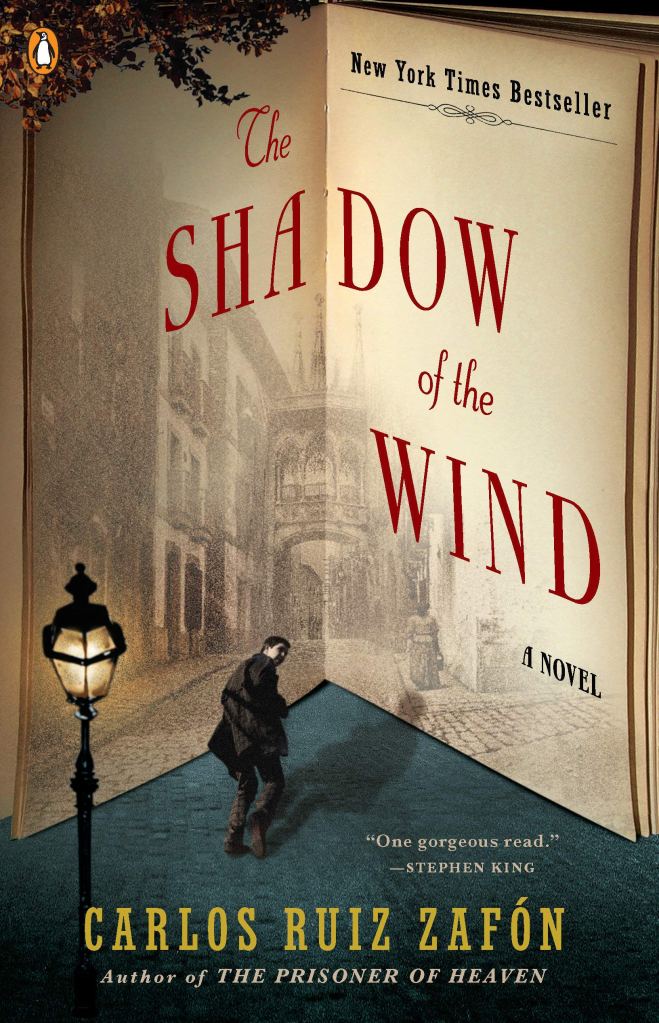
This book – The Ecumenical Councils of the Catholic Church: A History (author: Joseph E. Kelly) – is anything but a dry read.  

More than just a book for religious historians, this book provides wide details and context on how church leaders came together – and sometimes didn’t come together – over the centuries to debate and articulate Christian theology.

I count myself among the bibliophiles who believe that every word of a book should be read to consider the book as having been read.   In the case of this book, there is so much historical detail about each council, and historical context surrounding each council, and absorbing trivia that I am finding myself selectively choosing how much to summarily read about each time period the first time through this book (I may satisfy myself with selectively reading the book once through and keeping it a reference book).   “Really?,” I found myself pondering.  “A, B, X, Y really happened at this or that council or during this or that period in Church history?!?!?”  As I read, I am scribbling trivia on sticky-notes to tell friends and fellow church folk about what I am learning about the history of the Christianity’s twenty-one ecumenical councils.  As many of us know, the first council was the Council of Nicea in 325 through to Vatican II in the 1960’s. 

Just this afternoon, I learned that an Empress was involved in the second council of Nicea in 786/7.   Some councils were more ecumenical than others – in some cases, the councils were more heavily attended by bishops from the east than bishops from the west; today, individual denominations decide for themselves which of these historical councils were “ecumenical” (of note, the book’s author provides a listing within the book of which denominations consider with councils to have been ecumenical).

For non-historians, reading this book seriously will take the reader into reading additional books to learn more about the history and context of what was happening at the time of each council. 

There’s plenty in this book for both historians and fans of religious trivia.   It’s a book that really needs to be read over time so as to really absorb the content covered for each time period.

Bibliophile and would-be-antiquarian Kim Burkhardt reviews books at The Books of the Ages and at The Hermitage Within. If you are a new visitor, it would be great to have you follow this blog (thank you!). If you know someone who would like this blog, please share it with them (thank you!).
Book Review: Spiritual Direction in the Early Christian East

Book
Authors: Irenee Halisherr, Foreward Bishop Kalistsos Ware

I very much enjoyed finding this book, Spiritual Direction in the Early Christian East. I was equally thrilled to discover that it was published by Cistercian Publications (I worked for a Cistercian monk-priest for a time……).

This is among books written on very specific topics – it’s great to find such books when they are written on a topic of personal interest. I take an interest in the history of religious thought in the Medieval period and earlier. I am also currently exploring spiritual direction. Thus, I was excited to order this book and read it.

A number of passages in the foreward prove tangible to the reader interested in spiritual direction:

  • The ministry of the spiritual father is already foreshadowed in the New Testament; ‘Though you have countless guides in Christ, you do not have many fathers. For I became your father in Christ Jesus through the Gospel.’ (1 Cor 4:15)”
  • “He helps his children in Christ precisely because he is willing to share himself with them, identifying his own life with theirs.”

Within the book itself, any number of passages artfully describe spiritual direction:

  • Desert fathers have, if not brought into being….at least, systemized this magnificent thing….’the divine art of healing another.'”
  • We should examine ….[the qualities]…. the Byzantines deemed most necessary to the exercise of spiritual direction.” This section of the book starts with discussion of any would-be spiritual director needing to possess the quality of charity with the aspect of charity that involves being loving (spoiler alert: read the book to discover the other deemed-necessary qualities!).
  • Later chapters of the book discuss how to enter into spiritual direction as a directee in such a way as to benefit from receiving spiritual direction – a useful topic of instruction.

In addition, any number of passages interestingly discuss Eastern Christianity:

  • This book is addressed to Western Christians interested in the East: the main intention is to make them breathe the spirit of which animated the great spiritual masters of the past….”
  • “Almost all the documents [referenced in the main of the book] belong to monastic literature. It could not be otherwise. Spiritual direction was not taught and practiced to perfection except among monks.”
  • “….abba Elias and abba Dorotheos….devoted themselves to a large monastery of virgins in Antripe, upper Egypt…..Their role, which they assumed spontaneously out of compassion consisted in maintaining or re-establishing peace among the some three hundred ascetrie (women ascetics) who had been accepted there…..” [Note: I now find myself wondering what literature is available for learning more about ascetrie!]

Spiritual Direction in the Early Christian East is an important contribution to books on spiritual direction and literature about Eastern Christianity – particularly the practice of spiritual direction. I encourage anyone interested in one or both topics to pick up this book.

Bibliophile and would-be-antiquarian Kim Burkhardt reviews books at The Books of the Ages. If you are a new visitor, it would be great to have you follow this blog (thank you!). If you know someone who would like this blog, please share it with them (thank you!).
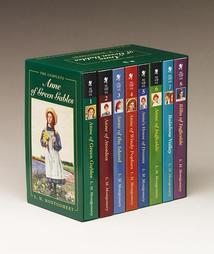
Book Review: Anne of Green Gables

Set of books
Series: Anne of Green Gables

I first became aware of the “timeless classic” series of Anne of Green Gables books when I was in my early teens. My step mother talked about liking the books – I wanted to like the books because she did.

The “spirited redhead orphan” in Prince Edward Island is wonderfully portrayed in these books. We get to watch her grow up and journey through adulthood, complete with her ongoing series of childhood antics.

I did read a couple of the books in this eight-book series when I was a teenager, then moved on to other things. I have recently come back to Anne of Green Gables. In looking for a distraction from the other topics I’ve been reading recently, Anne is proving to be a pleasant distraction. Her character is portrayed in a readable way. Further, the author wrote these books in a light, easy-reading style yet also inserts insightful observations that engross our interest in human nature.

This time, I am re-reading the first two books so that I can read the remaining six books. I find myself dog-earing pages that have interesting observations worth reflecting up repeatedly.

Bibliophile and would-be-antiquarian Kim Burkhardt reviews books at The Books of the Ages. If you are a new visitor, it would be great to have you follow this blog (thank you!). If you know someone who would like this blog, please share it with them (thank you!).
Book Review: Grief on the Road to Emmaus

I recently bought Beth L. Hewitt’s Grief on the Road to Emmaus.

I read a lot of books; I am finding this one to be a book that is both readable and experiential. Given that I spent years keeping my mind and emotions separate, I now appreciate a book that engages both mind and heart in a life-engaging, reflective manner.

Beth Hewitt observes in this book that not only do we need to grieve the loss of our loved ones who pass on (or move out of our lives, I suppose), we have to grief life’s pathways that don’t go the way we would have preferred. Lost a job? Grieve. Lost a limb? Grieve. Got robbed? Grieve. Got seriously injured in an accident? Grieve. I’ve probably heard this before, but it didn’t sink in. “Just move on” is the motto many of us expect shall get us through life’s challenges. Wrong. We need to grieve. When we don’t grieve, we don’t heal. When we don’t heal, we don’t really move on.

Further, Hewitt’s instructions on how to be present with people who are grieving has application in daily life. If we were to start treating everyone with the approaches described in this book – such as # – life would be less transactional, more interactional.

Something I didn’t know when I ordered this book is that Beth Hewitt wrote this book from a Benedictine view. Wow, added bonus. I am a parishioner at a St. Benedict parish and, as such, have learned some Benedictine lessons from this parish in recent years; this book is complimenting those lessons in helpful and meaningful ways. Loving the book!

Book reviewer Kim Burkhardt blogs at The Books of the Ages and at our partner organization, A Parish Catechist.