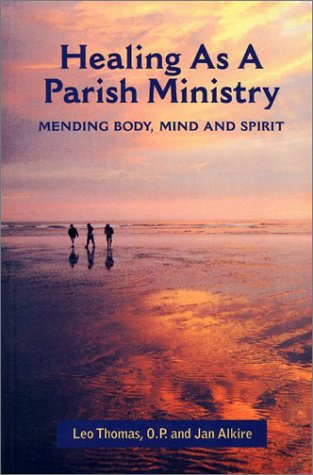
Book Review: Healing as a Parish Ministry

I was happy to stumble upon this book in a Little Free Library and to then discover that this practical and helpful book was locally written (i.e., Seattle, Washington).

The summary of this book on Goodreads states: “Jesus’ mandate to heal the sick is beginning to enter into faith communities today. In this sound and practical book, Father Leo Thomas and Jan Alkire show how this vital ministry is rooted in Christian scriptural and sacramental tradition. Pastors and lay leaders will benefit from the authors’ faith-filled, balanced wisdom. ‘Healing as a Parish Ministry’ will help all who read it become more effective channels of Christ’s healing to those who are hurting.”

Jesus healed the sick during his time on earth. Jesus instructed his disciples to heal the sick. Pope Francis talks today about the church being a “field hospital.” In a workshop I’m taking through Franciscan University’s Catechetical Institute, the instructor talks about church-goers sometimes preferring to go to their pastor/church for help before going to mental health providers. The message is communicated in many ways that church is meant to be a place where people can come for healing and direction. This book – Healing as a Parish Ministry – provides practical, front-line instruction to parishes – local churches – on how to provide healing ministries at one’s church.

In their book Healing as a Parish Ministry:

  • Leo Thomas and Jan Alkire write about faith healing does not mean curing natural consequences of what happens in life; rather, that faith healing is often about bringing us into the fullness of who God wants us to be – a very healing experience!
  • Thomas and Alkire write about how to set up a parish healing ministry – and why it is important.
  • The authors provide useful resources on how to connect meaningfully and usefully with parishioners who are in a time of need. Of equal importance, they also provide practical tips on what NOT to do so as to avoid alienating parishioners or causing ill will.

I read this book as a person who has found healing in church and who wants healing to be something that happens for many people in church. In my case, I returned to church – after a time away – with a painful neuropathic medical condition. That condition includes a hyper-stimulated sympathetic nervous system and associated physical pain. After returning to church, I found that contemplative prayer (and yoga, in my case) slowly calmed my over-stimulated nervous system – resulting in a reduction in physical pain. When I later came upon this book, I found that the book speaks to the type of healing I’ve experienced – I see the book having practical and real – real-world – insights and application.

This book is a great resource! I recommend this book to anyone who wants churches to be a place of healing.

Kim Burkhardt blogs at The Books of the Ages and A Parish Catechist (and a “Content Creator/Individual” member of the Association of Catholic Publishers). If you are a new visitor, it would be great to have you follow this blog (thank you!). If you know someone who would like this blog post, please share it with them (thank you!).
Book Review: The Screwtape Letters (C.S. Lewis)

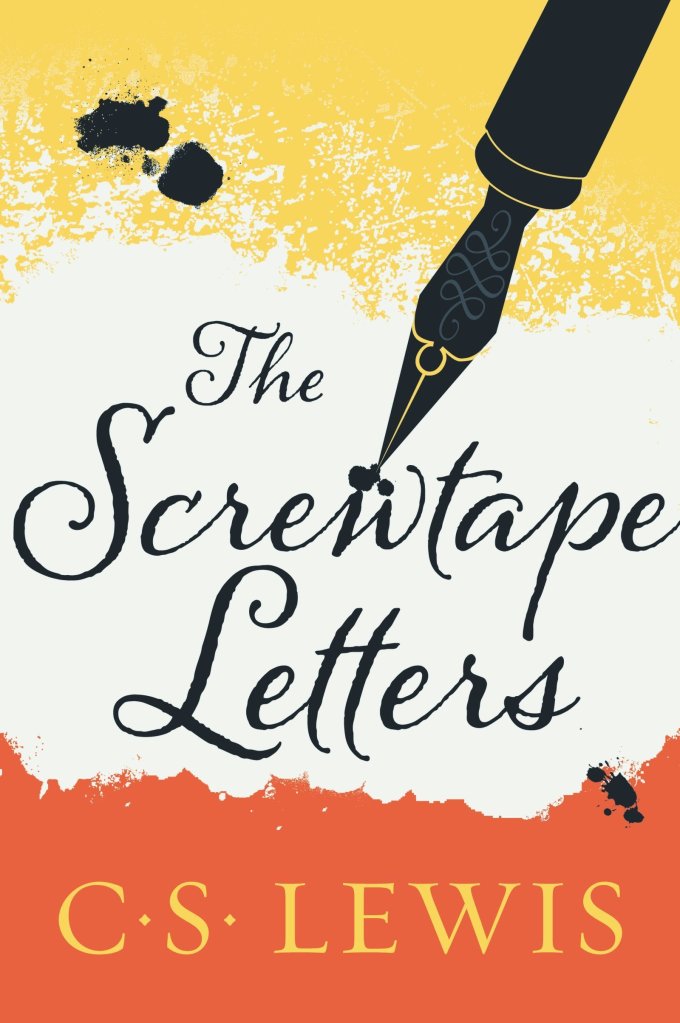
The Screwtape Letters (C.S. Lewis)

I am not sure how I feel about reviewing a book that many people have already read (i.e., it’s so widely read that it perhaps doesn’t need much of an introduction!)…. With that said, I ended up choosing to review this timeless classic for anyone who hasn’t yet found and read this must-read book.

A friend – and spiritual guide – gave me a copy of The Screwtape Letters when I was in high school. Because it’s such a well-written and insightful spiritual classic, the book’s insights practically inform my faith life. I return to the book periodically, though I don’t ever need to re-read the entire book because the book’s contents impacted me enough the first time for its’ content to leave a lasting impression.

This book is well-described on Goodreads: “The Screwtape Letters by C.S.  Lewis is a classic masterpiece of religious satire that entertains readers with its sly and ironic portrayal of human life and foibles from the vantage point of Screwtape, a highly placed assistant to ‘Our Father Below.’ At once wildly comic, deadly serious, and strikingly original, C.S. Lewis’s The Screwtape Letters is the most engaging account of temptation — and triumph over it — ever written.”

When I first read this book (high school), I was just old enough to grasp what C.S. Lewis was getting at in this insightful, informing, and at the same time entertaining read. I had moved beyond Lewis’ Chronicles of Narnia (my third grade teacher introduced us to that wonderful series of children’s books, which I read six times in elementary school) and was ready to start having my faith challenged on a maturing level. The Screwtape Letters helped me grasp – in an immensely readable way – that temptation comes to us in subtle and psychologically powerful ways in order to tempt us effectively.

I’ve still got the copy of The Screwtape Letters that I was given in high school. I recently came upon another copy in a Little Free Library – I brought it home because I want to pass it on to another reader (if I can find someone who hasn’t yet read it!)… (note: that second copy led to this book review). This book’s writing style makes it a worthwhile read for Christians and non-Christians alike – it tells us as much about our own psychological makeup and how we humans surrender to temptation’s allure as it does about the devils who are out to outwit us. A book for all ages (chronological ages and eras).

Kim Burkhardt blogs at The Books of the Ages and A Parish Catechist. If you are a new visitor, it would be great to have you follow this blog (thank you!). If you know someone who would like this blog post, please share it with them (thank you!).
Book Review: Introduction to Christian Worship

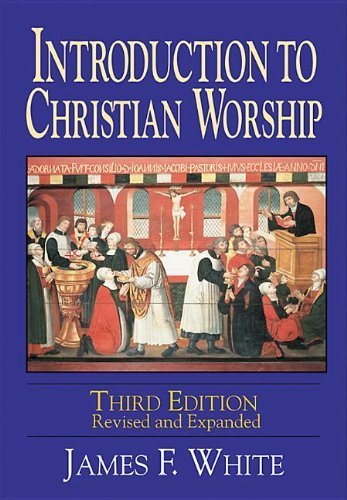
This book – Introduction to Christian Worship (Third Edition) by James F. White – is an academic book elucidating the how-and-why of how Christian church services are organized, how the structure of church services have developed and changed over the centuries (i.e., pastors, liturgists, interested congregants, academics, and religious historians).

This book covers every aspect of the Christian liturgy – both in minutia and comparative details on how (and why) Christian church services (and other aspects of Christian worship such as Christian Initiation, baptism, weddings, and anointing of the sick) are the same across denominations as well as detailed discussion of how various aspects of church liturgy vary among denominations. The history of how church liturgy developed over the centuries is widely covered throughout the book. The wide breadth – and detail – of knowledgeable insight demonstrate many years of comparative religious study by the author (he was, after all, an academic).

Among the very readable insights of this book is an interesting point about the Bible readings that many denominations hear read at church on Sunday (page 75 of the third edition). James White informs readers that the Catholic church developed its’ current cycle of biblical readings read at mass after Vatican II. Many Catholics know of the three-year cycles of readings known as years A, B, C (there is a two-year cycle for the readings at weekday masses); White informs readers that many Protestant denominations also adopted the same reading cycle for weekend services – meaning there is a broad level of uniformity among many denominations of which Bible passages are heard each Sunday (news to me! I knew that several denominations – such as Episcopalians, Anglicans, Presbyterians, perhaps Lutherans and Methodists – read many of the same readings at church on the same calendar as Catholics; this shared practice seems to be more uniform and widespread than I realized. Denominations that read these shared Bible readings each weekend read from “The Lectionary for Mass” for Catholics and “The Common Lectionary” for Protestants). This standardization of readings moved some Protestant pastors away from only reading self-selected Bible passages at church that supported the political views of pastors and/or their congregations.

James F. White’s Introduction to Christian Worship is an informative read for anyone interested in Christian liturgy.

Kim Burkhardt blogs at The Books of the Ages and A Parish Catechist (and a “Content Creator/Individual” member of the Association of Catholic Publishers). If you are a new visitor, it would be great to have you follow this blog (thank you!). If you know someone who would like this blog post, please share it with them (thank you!).
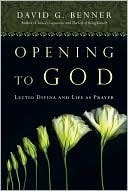
Book Review: David Benner’s Opening to God

I was hooked when I read the back cover of David Benner’s Opening to God: Lectio Divina and Life as Prayer.

I read these excerpts from the book’s back cover as poetry describing the best I have experienced in prayer: “Prayer is not just communication with God: it is communion with God. As we open ourselves to him, God does the spiritual work of transformation in us…….discover openness to God as the essence of prayer…..Move beyond words [in prayer] to become not merely someone who prays, but someone whose entire life is prayer in union with God.”

Okay, I haven’t yet gotten to living as “someone whose entire life is prayer,” but my prayer life has joyously moved beyond “words communicated to God” to prayer being a relationship – without the need for human language” (as I mention in several previous blog posts such as this one). In my case, such prayer was given to me as a grace.

I started reading this book last night. Happily, the book is living up to the book’s description – a descriptive book about the dynamics of prayer being a meaningful relationship with God. A worthwhile read about what prayer can be and is meant to be.

Kim Burkhardt blogs at The Books of the Ages and A Parish Catechist. If you are a new visitor, it would be great to have you follow this blog (thank you!). If you know someone who would like this blog post, please share it with them so they can subscribe (thank you!).

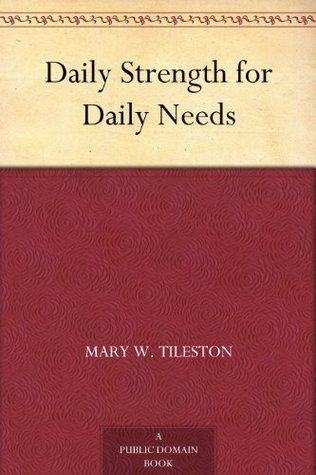
Book review: Daily Strengths for Daily Needs

Thank you to The Books of the Ages friend Karen Chartier for this book review. Much appreciated!

Book Review: Daily Strengths for Daily Needs

Mary W. Tileston

The Family Inspirational Library

Copyright 1928

Mary Tileston’s book Daily Strengths for Daily Needs offers a compilation of quotes from thoughtful, spiritual thinkers throughout the ages, from those found in the Bible to R.W. Emerson, to Marcus Antoninus, to George Elliot, to St. Frances de Sales — and scores of others.

Published first in 1884, it remains pertinent to the present. ‘In these days of great emotion and radical changes, we need the steady, persistent and refreshing inspiration of spiritual thoughts, which, entering the texture of our life in the morning, will guide and refresh us through the day, or, in the evening, give a sense of confidence and peace.’ opens the preface, and both the need and the outcomes outlined are relevant.

I was given this book by a friend and have been inspired by it throughout the year. I highly recommend it. Below are examples of quotes of Tileson’s book.

The one who will be found in trial capable of great acts of love, is ever the one who is always doing considerate small ones.          F. W. Robertson

A man is relieved and gay when he has put his heart into his work and done his best; but what he has said or done otherwise, shall give him no peace.                   R. W. Emerson

We may, if we choose, make the worst of one another.  Everyone has his weak points; everyone has his faults; we may make the worst of these; we may fix our attention constantly upon these.  But we may also make the best of one another.  We may forgive, even as we hope to be forgiven…By loving whatever is loveable in those around us, love will flow back from them to us, and life will become a pleasure instead of a pain; and earth will become like heaven; and we shall become not unworthy followers of Him whose name is Love.                      A. P. Stanley

Book Reviewer: Karen Chartier

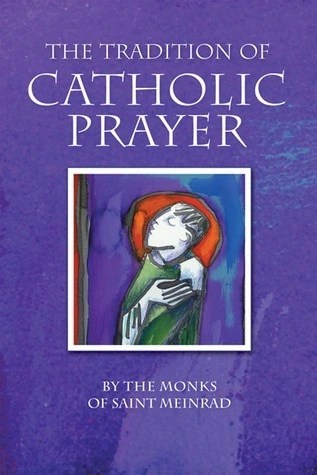
The Tradition of Catholic Prayer: Book review, reflections

In their book The Tradition of Catholic Prayer, The Benedictine monks of Saint Meinrad Monastery (editors: Christian Raab and Harry Hagan) bring us a rich and rewarding read. When we want to read about prayer, it’s natural to want to turn to monks!

The depth and breadth of this book are summarized well on the book’s back cover, beginning with the following sentence: “Catholics have a rich and ancient prayer tradition that informs contemporary practice.” No wonder that people looking to deepen their prayer life look – among other places – to the Catholic Church. The variety of Catholic prayer experience and the historical context for this “rich and ancient prayer tradition” are covered engagingly in this very readable book. It’s worth a read for anyone looking to deepen their prayer life; it has helped nourish my ever-present hunger to sustain an rich and deep prayer life.

Kim Burkhardt blogs at The Books of the Ages. and at A Parish Catechist.