Book: Paths to the Heart – Sufism and the Christian East
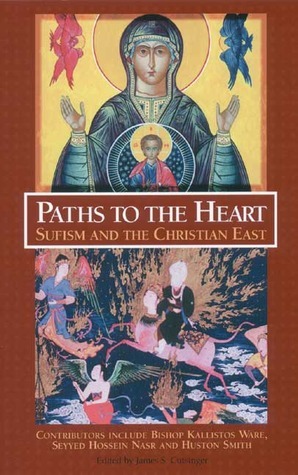
Paths to the Heart: Sufism and the Christian East is an interesting book – a compilation of presentations from a conference held shortly after 9/11 where a group of people met to discuss similarities of the religious views between the Christian East (i.e.., Eastern Orthodox) and Sufi Muslim.
I am about half-way through this book. What emerges in this book is engaging observations about the contemplative aspects shared by Eastern Orthodox and Sufi Islam. For anyone interested in the contemplative aspects of Eastern Orthodox, Sufi Islam, or both….. Paths to the Heart: Sufism and the Christian East is a worthwhile read – a book that one doesn’t want to put down; rather, it’s a book to be savored and read again.
Bibliophile and would-be-antiquarian Kim Burkhardt reviews books at The Books of the Ages. If you are a new visitor, it would be great to have you follow this blog (thank you!). If you know someone who would like this blog, please share it with them (thank you!).
This is among books written on very specific topics – it’s great to find such books when they are written on a topic of personal interest. I take an interest in the history of religious thought in the Medieval period and earlier. I am also currently exploring spiritual direction. Thus, I was excited to order this book and read it.
A number of passages in the foreward prove tangible to the reader interested in spiritual direction:
The ministry of the spiritual father is already foreshadowed in the New Testament; ‘Though you have countless guides in Christ, you do not have many fathers. For I became your father in Christ Jesus through the Gospel.’ (1 Cor 4:15)”
“He helps his children in Christ precisely because he is willing to share himself with them, identifying his own life with theirs.”
Within the book itself, any number of passages artfully describe spiritual direction:
Desert fathers have, if not brought into being….at least, systemized this magnificent thing….’the divine art of healing another.'”
We should examine ….[the qualities]…. the Byzantines deemed most necessary to the exercise of spiritual direction.” This section of the book starts with discussion of any would-be spiritual director needing to possess the quality of charity with the aspect of charity that involves being loving (spoiler alert: read the book to discover the other deemed-necessary qualities!).
Later chapters of the book discuss how to enter into spiritual direction as a directee in such a way as to benefit from receiving spiritual direction – a useful topic of instruction.
In addition, any number of passages interestingly discuss Eastern Christianity:
This book is addressed to Western Christians interested in the East: the main intention is to make them breathe the spirit of which animated the great spiritual masters of the past….”
“Almost all the documents [referenced in the main of the book] belong to monastic literature. It could not be otherwise. Spiritual direction was not taught and practiced to perfection except among monks.”
“….abba Elias and abba Dorotheos….devoted themselves to a large monastery of virgins in Antripe, upper Egypt…..Their role, which they assumed spontaneously out of compassion consisted in maintaining or re-establishing peace among the some three hundred ascetrie (women ascetics) who had been accepted there…..” [Note: I now find myself wondering what literature is available for learning more about ascetrie!]
Spiritual Direction in the Early Christian East is an important contribution to books on spiritual direction and literature about Eastern Christianity – particularly the practice of spiritual direction. I encourage anyone interested in one or both topics to pick up this book.
Bibliophile and would-be-antiquarian Kim Burkhardt reviews books at The Books of the Ages. If you are a new visitor, it would be great to have you follow this blog (thank you!). If you know someone who would like this blog, please share it with them (thank you!).
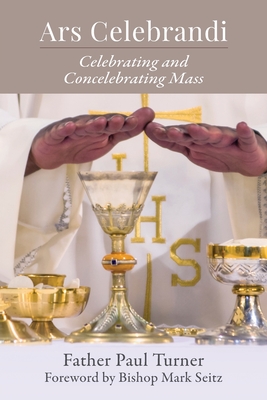
This book, written for priests to inspire artful presiding at mass, brings to life the nuts and bolts of how the Catholic mass brings liturgy – the work of the people – is celebrated. For the non-ordained among us, Ars Celebrandi: Celebrating and Concelebrating Mass provides insight into how the liturgy is designed to invigorate the faith of the faithful.
Two examples of this book’s insights come from the foreward of Ars Celebrandi (written by Bishop Mark Seitz):
“The liturgy is the action of the entire people of God who are being more perfectly formed into the Body of Christ. The Second Vatican Council’s seminal teaching that the people of God are called to full, conscious, and active participation is based upon this fundamental recognition.”
“The liturgy, as we know, is a language and a certain style of communication that comes down to us from the ages but is also constantly adapting under the guidance of the Spirit in every age. It a language of signs and symbols that are read universally by people in the church. To be sure, there are regional and cultural aspects that are rightly represented as local communities worship, but these are secondary to the expressions that unite us across times and places.”
Then, we lay readers learn in this book about the complexity of presiding at church services. For example:
“[Presiding at a liturgy] involve a marriage of books and ministers. The liturgical norms [i.e., what is suppose to be done] encounter a real-time relationship with the individual persons ordained to carry them out….The relationship presumes that priests know the liturgical norms. However, the rules are complex. The books detailing them are many. Some laws keep changing….Furthermore, not every aspect of liturgy is prescribed. When presiding, a typical priest is suppose to do certain things, is free to do certain other things, and takes freedom to do even more….” [Subsequent paragraphs delve into specific examples of these “certain things” and “certain other things.}
Reading this book is of interest for we lay people in that we become more observant of the nuts and bolts of what happens at church. A book worth reading.
Bibliophile and would-be-antiquarian Kim Burkhardt reviews books at The Books of the Ages. If you are a new visitor, it would be great to have you follow this blog (thank you!). If you know someone who would like this blog, please share it with them (thank you!).
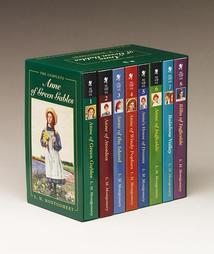
I first became aware of the “timeless classic” series of Anne of Green Gables books when I was in my early teens. My step mother talked about liking the books – I wanted to like the books because she did.
The “spirited redhead orphan” in Prince Edward Island is wonderfully portrayed in these books. We get to watch her grow up and journey through adulthood, complete with her ongoing series of childhood antics.
I did read a couple of the books in this eight-book series when I was a teenager, then moved on to other things. I have recently come back to Anne of Green Gables. In looking for a distraction from the other topics I’ve been reading recently, Anne is proving to be a pleasant distraction. Her character is portrayed in a readable way. Further, the author wrote these books in a light, easy-reading style yet also inserts insightful observations that engross our interest in human nature.
This time, I am re-reading the first two books so that I can read the remaining six books. I find myself dog-earing pages that have interesting observations worth reflecting up repeatedly.
Bibliophile and would-be-antiquarian Kim Burkhardt reviews books at The Books of the Ages. If you are a new visitor, it would be great to have you follow this blog (thank you!). If you know someone who would like this blog, please share it with them (thank you!).
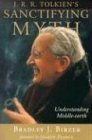
When I read The Fellowship: The Literary Lives of the Inklings, I enjoyed getting more acquainted with the literary aspects of Tolkien, Lewis, and the people around them. Yet, as I also found myself deeply curious about the religious relationship – and what I was sure must have included strains – between a British (South African!) Catholic and an Ulster Protestant (that aspect wasn’t delved into particularly in The Fellowship: The Literary lives..).
Birzer’s book Sanctifying Myth takes a sociological look into Tolkien and mythology. Tolkien, for example, considers myth to by sociologically necessary for humanity and to be every bit as tangible as scientific learning. This book also provides a deep dive into the religious relationship and tensions between Tolkien and Lewis. For example, Tolkien considered his Hobbit books to be more Christian in nature than C.S. Lewis’ The Screwtape Letters! There are also other curious tidbits in this book. For example, when Tolkien’s son Christopher enlisted in WWII, an RAF form asked Christopher Tolkien to list his father’s occupation; he listed his father’s occupation as “wizard.”
Most evenings, I read a book for a few minutes before going to sleep. At present, I am reading Sanctifying Myth before going to sleep. However, I am finding that I need to read this book earlier in the day; there’s enough stimulation and tension in the book to keep a person awake…..
Bibliophile and would-be-antiquarian Kim Burkhardt reviews books at The Books of the Ages. If you are a new visitor, it would be great to have you follow this blog (thank you!). If you know someone who would like this blog, please share it with them (thank you!).
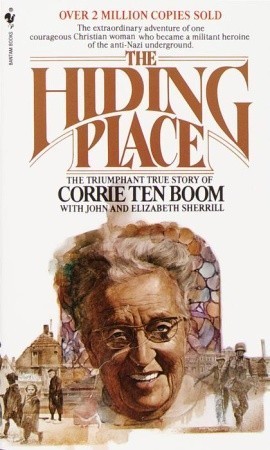
I just took a break from reading another book to read (re-read?) Corrie Ten Boom’s The Hiding Place.
When I recently happened upon a copy of The Hiding Place, I thought “Yes, I read this.” Perhaps I did read it in high school or in my twenties. I decided to read it again – this time for its’ Christian insight. As I read it this time, I didn’t remember the details of the book. If I read it before, I think I probably read it as a historical account of WWII.
The book absolutely is a historical account of WWII and of a family who participated in Dutch resistance. It is also the account of a family who deeply put their Christian faith into practice.
Most evenings, I pick up the latest book I am reading to read a few pages before I go to sleep. Last night, I finished The Hiding Place and then found myself unable to sleep because of the distress of reading about the horrors in Germany’s concentration camps. I was also compelled – as the author intended – about the author’s conviction that we are compelled to forgive. At the end of the book, she wrote of spending time after the war – and after being released from Ravensbrück concentration camp – helping WWII survivors to heal and educating people about forgiveness (prompted significantly from her sister’s witness on this topic before dying). At the very end of the book, Corrie Ten Boom wrote of encountering a guard from Ravensbrück where her beloved sister Betsy perished. Forgive even him? She had to reach deep into herself to try forgiving, then ask God to help her forgive. Ten Boom wrote compellingly that it was God who made it possible for her to forgive.
For anyone trying to live a life of faith, this book is a must-read. Corrie Ten Boom absolutely challenges us to go farther than we think we can in putting our faith into practical practice.
Bibliophile and would-be-antiquarian Kim Burkhardt reviews books at The Books of the Ages. If you are a new visitor, it would be great to have you follow this blog (thank you!). If you know someone who would like this blog, please share it with them (thank you!).
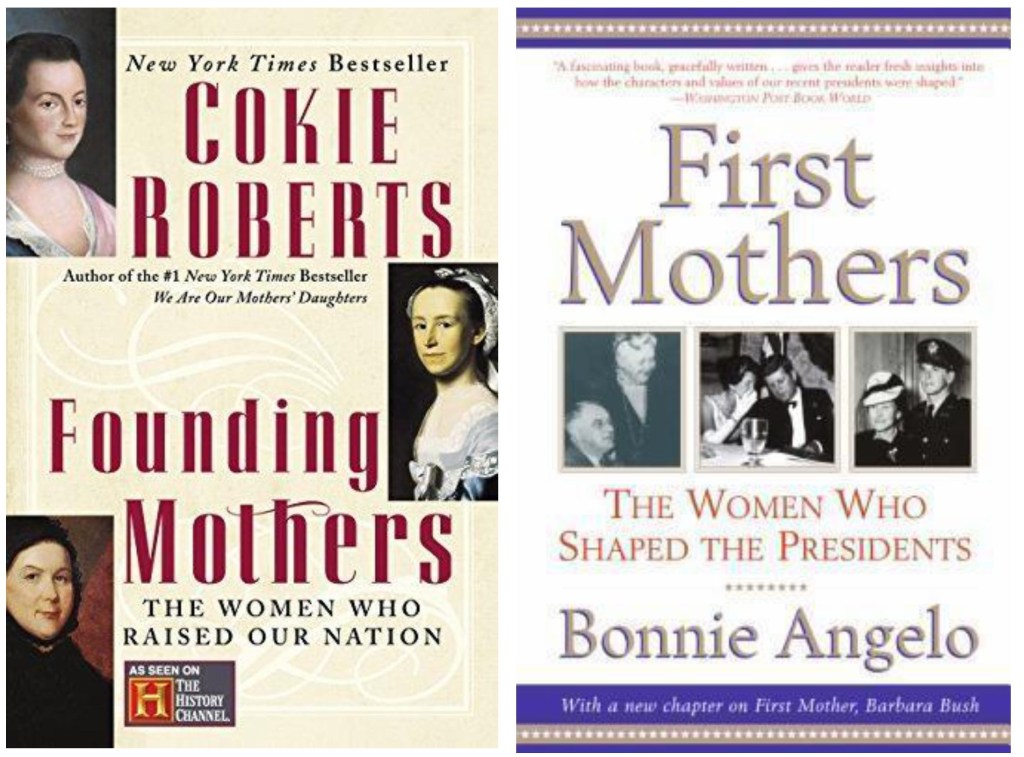
In these two books, political journalists Cokie Roberts and Bonnie Angelo contribute to our understanding of women who have influenced the U.S. as the mothers, sisters, and daughters of the country’s founding men and mothers of more recent presidents.
Such books are an important contribution to our understanding of the nation’s leadership. I found value in reading both books. I am keeping book books (I am one of those readers who keep valued books I’m read – because I value the books and because I want visitors to my residence to see the books that have helped shape my own thinking….).
In Founding Mothers, I learned historical trivia such as Ben Franklin’s lifelong correspondence that he sustained with his favorite sister Jane Franklin.
When writers speculate about what their biographical subjects must have thought in specific situations, I sometimes wonder how a biographer came to think that the people they wrote about would have thought X or Y in a given situation. Not so in the case of Bonnie Angelo’s First Mothers. Bonnie Angelo’s speculations resonate as viable and insightful thoughts into what First Mothers likely thought in specific situations. I also learned that all the presidents whose mothers are written about in this book spoke more about how their mothers influenced them than about how their fathers influenced them.
These two books are both worth reading.
Bibliophile and would-be-antiquarian Kim Burkhardt reviews books at The Books of the Ages. If you are a new visitor, it would be great to have you follow this blog (thank you!). If you know someone who would like this blog, please share it with them (thank you!).
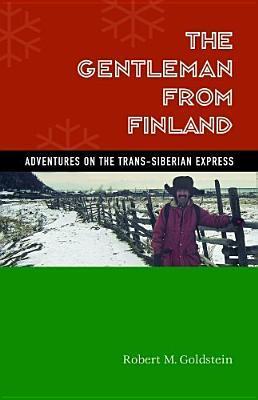
The author and I both live in the Seattle area. I found myself drawn to the book as the author and I both travel solo and this book is his story of riding the Trans-Siberian Express. As a solo traveler (I call myself a “solo nomad”), I don’t meet many kindred spirits who like to travel solo. In pondering The Gentleman from Finland – and in purchasing another of his books – I began to ponder solo travelers. I searched online, as a result of wondering about other solo travelers who I don’t often find among my own acquaintances and because of this book, and was pleased to discover a website dedicated to solo travelers.
When I brought this book home a few months ago and read it, I laughed so hard that I cried. Robert M. Goldstein’s willingness to write about his crazy mishaps riding the Trans-Siberian Express across the Soviet Union (he’s a train enthusiast) had me navigating a tension – I wanted to savor each hilarious moment in the book, yet anxiously wanted to turn the page to read what was going to happen next. It takes a certain wit and perhaps a self-deprecating outlook to be entertained by life’s mishaps.
I so thoroughly enjoyed this book that I gave a copy of the book to a friend and checked to find out if he’s written more books. Fortunately, he’s written two more accounts of his travels. I needed a few months to savor this book before tackling another of Goldstein’s books. I have now ordered his travel biography Riding With Reindeer and very much look forward to reading it.
Bibliophile Kim Burkhardt reviews books at The Books of the Ages. If you are a new visitor, it would be great to have you follow this blog (thank you!). If you know someone who would like this blog, please share it with them (thank you!).
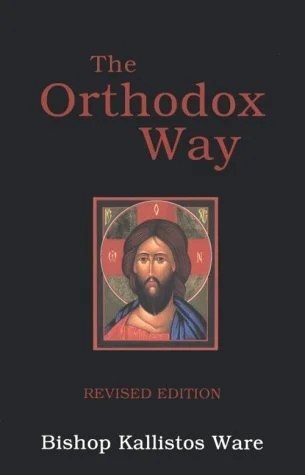
The back cover of this book describes The Orthodox Way as follows:
“This book is a general account of the doctrine, worship and life of Orthodox Christians by the author of the now classic THE ORTHODOX CHURCH. It raises the basic issues of theology…. helps to fill the need for a modern Orthodox catechism… Throughout the book, Father Ware shows the meaning of Orthodox doctrine for the life of the individual Christian.”
For readers who have anything of a contemplative bent or an interest in mysticism, I find the book to be an important read for growing one’s faith (the Orthodox church has a very definite contemplative vein within it). I recently quoted The Orthodox Way by Bishop Kallistos Ware in a previous blog post:
“The Greek Fathers liken man’s encounter with God to the experience of someone walking over the mountains in the mist: he takes a step forward and suddenly finds that he is on the edge of a precipice, with no solid ground beneath his foot but only a bottomless abyss.”
I read this book a year or two ago. I find myself coming back to it; statements such as the one above feed my prayer life. This is the type of book I read before going to bed – a book to lift one’s spirits. A worthwhile read!
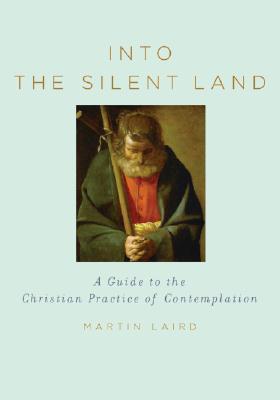
As a contemplative pray-er, I find this book refreshing. Rather than only being a how-to book on the mechanics of how to pray contemplatively, this is the type of contemplative prayer book I look for: a description of what happens when we do a deep dive into contemplative prayer. It is – to paraphrase a speaker I heard once – the “poetry of our lives” that demonstrates the animation of one’s prayer life when prays contemplatively. Such poetry – it seems to me – helps lead readers into the experience of contemplative prayer via surrender into what we read in the books’ text.
A few “poetry of our prayer lives” excerpts:
“Silence is an urgent necessity for us: silence is necessary if we are to hear God speaking in eternal silence; our own silence is necessary if God is to hear us” (page 2).
“This book…proceeds from an ancient Christian view that the foundation of every land is silence (Ws 18:24), where God simply and perpetually gives himself” (page 6).
“…the grace of Christian wholeness that flowers in silence….dispels (the) illusion of separation [from God]” (page 16).
This is a short book, but it takes a long time to read – its’ contents are contemplated rather than merely read. It contributes meaningfully to one’s prayer life. This is a book I will keep.
 The Books of the Ages