Book Review: This is My Body, A Call to Eucharistic Revival

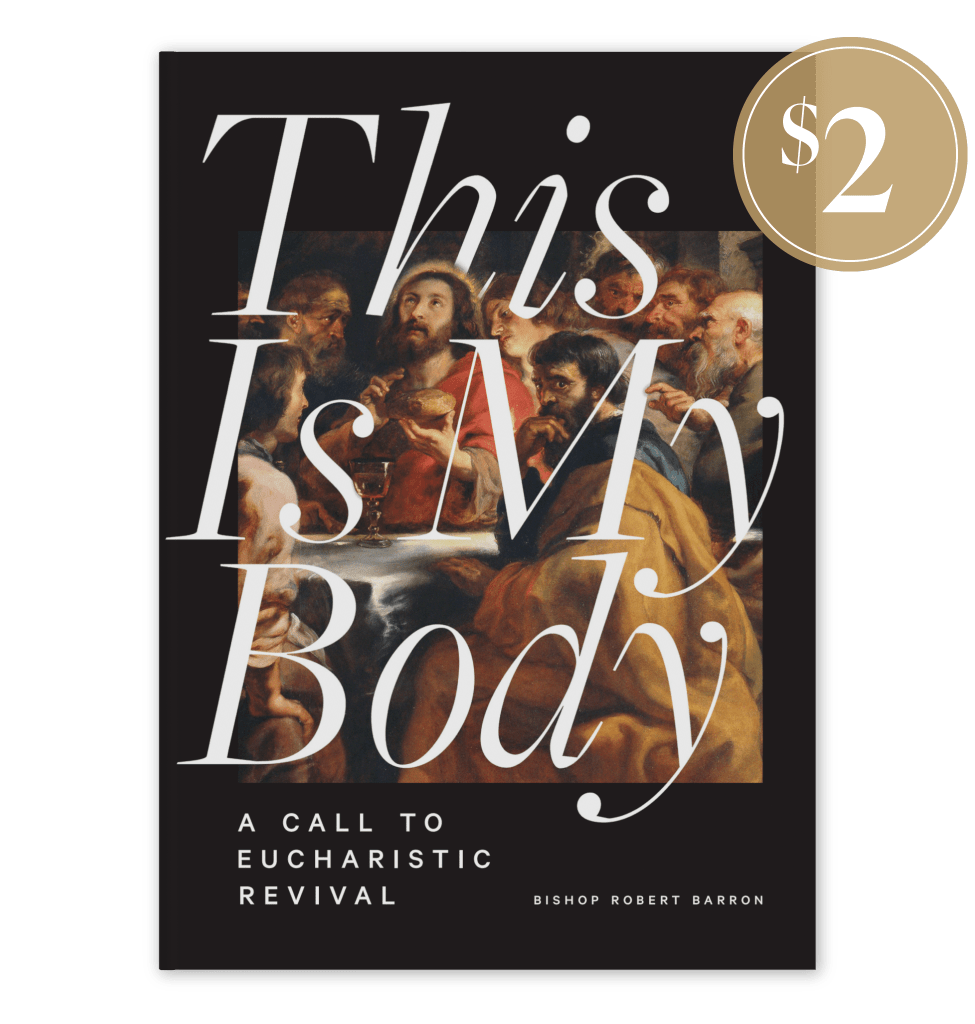
Book: This is My Body, a Call to Eucharistic Revival

was recently given Bishop Robert Barron’s book This is My Body: A Call to Eucharistic Revival. When I started reading it, I quickly found it as readable and engaging as Henri Nouwen’s book With Burning Hearts.

The author, Bishop Robert Barron, wrote this book as part of a U.S. “call to Eucharistic renewal” (he helped initiate a U.S. call to Eucharistic renewal while the Chair of the Committee on Evangelization and Catechesis for the United States Conference of Catholic Bishops, USCCB). This book is engaging because it takes readers to the deeper meaning of faith concepts we’re meant to learn; he does so in an easily readable and interesting manner – plenty of “ah ha” moments. At the risk of reviewing this book with too much hyperbole, I stopped earmarking interesting pages after a few pages because I was earmarking most pages.

Here are two excerpts from This is My Body, A Call to Eucharistic Revival:

….”The opening line of the book of Genesis tells us that ‘in the beginning, God created the heavens and the eart’ (Gen. 1:1). Why did God, who is perfect in every way and who stands in need of nothing outside himself, bother to create at all? There are mythologies and philosophies galore – both ancient and modern – that speak of God needing the universe or benefiting from it in some fashion, but Catholic theology has always repudiated these approaches and affirmed God’s total self-sufficiency….God created the heaven and earth ‘of his own goodness and almighty power, not for the increase of his own happiness.'”

“Love, in the theological sense, is not a feeling or a sentiment, though it is often accompanied by those psychological states. In its essence, love is an act of the will, more precisely, the willing of the good of the other as other. To love is really to want what is good for someone else and then to act on that desire.”

This book is intentionally priced affordably to get it into the hands of readers. I am passing along copies to fellow readers who live in my community. If you are looking for something to read, you can order it online here.

Kim Burkhardt blogs at The Books of the Ages and A Parish Catechist (and a “Content Creator/Individual” member of the Association of Catholic Publishers). If you are a new visitor, it would be great to have you follow this blog (thank you!). If you know someone who would like this blog post, please share it with them (thank you!).
Book Review: Playing with Dragons – Living with Suffering and God

Book: Playing with Dragons

I heard of this book recently while watching one of “The Great Courses” about the history of the Old Testament. The Great Courses presenter who mentioned this book was discussing the cultural context of how dragons came to be mentioned in the Hebrew Bible; in the context of that presentation, he referred to this book Playing with Dragons in the same sense of the book’s Goodreads summary, saying (in effect): “This is a book for those want to go beyond standard discussions of faith and suffering.”

There are multiple layers of opportunity for understanding the depths of religious meaning. The academic/sociologist/theologian James Fowler chronicles in his book Stages of Faith the six stages we have the opportunities to progress through in faith as we age; too often, we adults settle for remaining perpetually in a high-school level of a stage three faith (as described by Fowler). In hindsight, I got stuck for some years as an adult in a transition moving from a stage three faith to stage four faith (a common occurrence, according to Fowler). It took time for me to begin growing in faith again; once I did, I was happy to discover new depths of religious insight – such as metaphors provided to us in Biblical texts and religious ritual. Therefore, I looked forward to Andy Angel’s book Playing with Dragons, Living with Suffering and God when I found recently found the book. I, as the Goodreads summary for this book mentions, “find standard discussions of faith and suffering frustrating” – I often find such discussions inadequate.

Personally, I accept that suffering is “part of the human condition” and a consequence of original sin. God gave us humans the opportunity to have a naturally happy time of it on earth; that opportunity was destroyed through free will via “original sin.” I don’t find the concept of original sin to be a limiting and heavy weight put on humanity; rather, we are provided with the opportunity to move beyond it through baptism and by nurturing a right relationship with God and the people around us.

In this Playing with Dragons book, I am hoped for discussion about how dragons are provided as a metaphor for us to wrestle on a human level with the challenges we must contend with during this lifetime.

This book is summarized on Goodreads as follows: “There be dragons all over the Bible. From the great sea monsters of Genesis to the great dragon of Revelation, dragons appear as the Bible opens and closes, and they pop their grisly heads up at various junctures in between. How did they get there and what on earth (or indeed in heaven) are they doing there? This is a book for those who find standard discussions of faith and suffering frustrating. Andy Angel opens up the rich biblical tradition of living with God in the midst of suffering. He takes the reader on a journey of exploration through biblical texts that are often overlooked on account of their strangeness–texts about dragons. He shows how these peculiar passages open up a language of prayer through suffering in which people share their anger, weariness, disillusionment, and even joy in suffering with God. Angel explores how such “weird” Scriptures open up a whole new way of praying and reveal a God who approves of honest spirituality, a spirituality that the Bible holds open but too many of its interpreters do not.”

What I found in the book was a cultural and religious context of the Old Testament – how and why dragons were symbolic representations of the challenges we wrestle with and – importantly – that metaphor provides us with a way to “wrestle with life’s challenges” in ways that literal vocabulary fails us. Epic dramas are useful.

Kim Burkhardt blogs at The Books of the Ages and A Parish Catechist. If you are a new visitor, it would be great to have you follow this blog (thank you!). If you know someone who would like this blog post, please share it with them (thank you!).
Book Review: Nourishing Love – A Franciscan Celebration of Mary

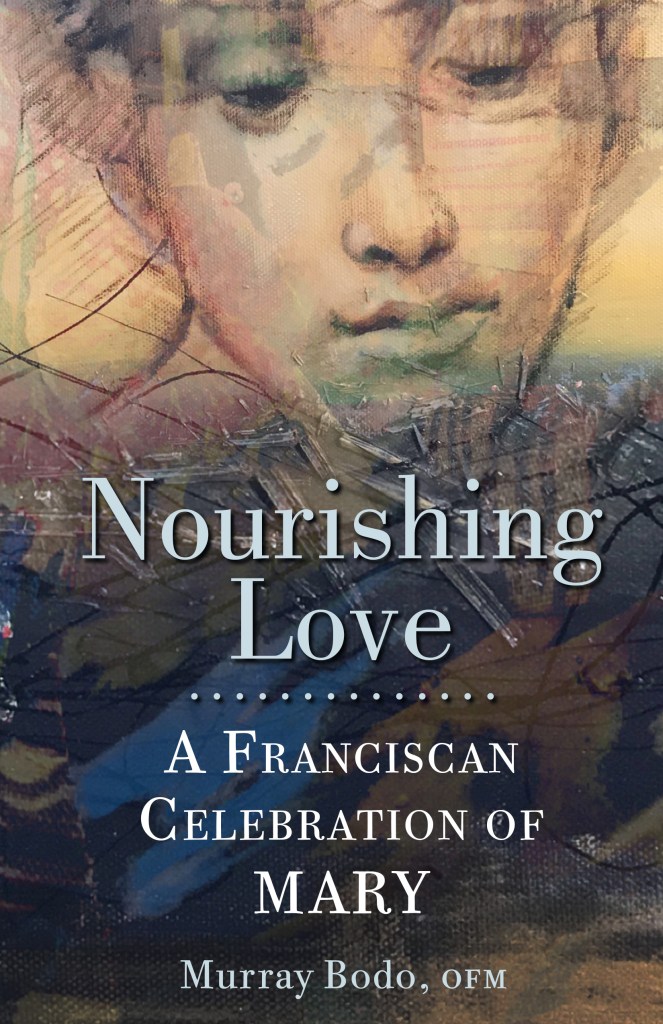
Nourishing Love a Franciscan Celebration of Mary

This book takes readers on a novel way of exploring Mary’s life (no, not a novel). For those of us who tend think of Mary either historically and/or as a saint, this book brings us an additional way to consider Mary.

Franciscan author (and priest) Murray Bodo offers us something similar to that of The Chosen TV series: a conceptual view of what it could have been like living Jesus’ or Mary’s lives – making their day-to-day lives more tangible for us than what many of us consider when reading the Gospels. Both this book and The Chosen contain historical aspects of the lives of Mary and Jesus (respectively). Reading historical accounts alone – however – don’t necessarily take us into thinking about the daily aspects what they did and felt as people.

In this book, Nourishing Love, there are reflections that take us to ponder, “what thoughts did Mary ponder?” After Jesus offered her and John to one another as mother-and-son, what conversations Mary and John have about Jesus? Possibly ponderings by Mary and possible – plausible – conversations between Mary and John are presented here to bring us into considering their lives on a very human level.

At one point in the book, the author writes, “Since Jesus was both God and man, he had his mother’s genes and was deeply influenced genetically, as most of us are, by his mother. He was Mary’s son, prompting us to imagine how Mary herself was in fact revealed in the person of her son.” Hmm….. Did genetics cause Jesus to look like his mother? Did Mary and Jesus share similar voice inflections? Did Jesus maintain some of Mary’s habits once he became an adult (ate the same foods for breakfast, had the same evening routines, etc.)? How much did Mary’s human personality influence Jesus’ human personality? The author of this book observes that the stories Mary told Jesus during his infancy and childhood may have influenced the types of stories Jesus chose to tell as an adult – including the parables he told. How she cared for the people around her could have been socially instructive for the human Jesus.

The way this book is constructed made me think of Ignatian exercises in terms of the creativity brought to subjects of faith. There’s a degree to which I felt uncomfortable with this book – I would more naturally gravitate to an academically-oriented sociological construct/analysis of people’s daily lives in first-century Palestine to get a sense of Mary’s life (that type of book would also be interesting!). Sometimes, though, discomfort is good. Discomfort can challenge us to consider topics in new ways; new perspectives help us grow.

Kim Burkhardt blogs at The Books of the Ages and A Parish Catechist. If you are a new visitor, it would be great to have you follow this blog (thank you!). If you know someone who would like this blog post, please share it with them (thank you!).
Book Review: Healing as a Parish Ministry

I was happy to stumble upon this book in a Little Free Library and to then discover that this practical and helpful book was locally written (i.e., Seattle, Washington).

The summary of this book on Goodreads states: “Jesus’ mandate to heal the sick is beginning to enter into faith communities today. In this sound and practical book, Father Leo Thomas and Jan Alkire show how this vital ministry is rooted in Christian scriptural and sacramental tradition. Pastors and lay leaders will benefit from the authors’ faith-filled, balanced wisdom. ‘Healing as a Parish Ministry’ will help all who read it become more effective channels of Christ’s healing to those who are hurting.”

Jesus healed the sick during his time on earth. Jesus instructed his disciples to heal the sick. Pope Francis talks today about the church being a “field hospital.” In a workshop I’m taking through Franciscan University’s Catechetical Institute, the instructor talks about church-goers sometimes preferring to go to their pastor/church for help before going to mental health providers. The message is communicated in many ways that church is meant to be a place where people can come for healing and direction. This book – Healing as a Parish Ministry – provides practical, front-line instruction to parishes – local churches – on how to provide healing ministries at one’s church.

In their book Healing as a Parish Ministry:

  • Leo Thomas and Jan Alkire write about faith healing does not mean curing natural consequences of what happens in life; rather, that faith healing is often about bringing us into the fullness of who God wants us to be – a very healing experience!
  • Thomas and Alkire write about how to set up a parish healing ministry – and why it is important.
  • The authors provide useful resources on how to connect meaningfully and usefully with parishioners who are in a time of need. Of equal importance, they also provide practical tips on what NOT to do so as to avoid alienating parishioners or causing ill will.

I read this book as a person who has found healing in church and who wants healing to be something that happens for many people in church. In my case, I returned to church – after a time away – with a painful neuropathic medical condition. That condition includes a hyper-stimulated sympathetic nervous system and associated physical pain. After returning to church, I found that contemplative prayer (and yoga, in my case) slowly calmed my over-stimulated nervous system – resulting in a reduction in physical pain. When I later came upon this book, I found that the book speaks to the type of healing I’ve experienced – I see the book having practical and real – real-world – insights and application.

This book is a great resource! I recommend this book to anyone who wants churches to be a place of healing.

Kim Burkhardt blogs at The Books of the Ages and A Parish Catechist (and a “Content Creator/Individual” member of the Association of Catholic Publishers). If you are a new visitor, it would be great to have you follow this blog (thank you!). If you know someone who would like this blog post, please share it with them (thank you!).
Book Review: The Screwtape Letters (C.S. Lewis)

The Screwtape Letters (C.S. Lewis)

I am not sure how I feel about reviewing a book that many people have already read (i.e., it’s so widely read that it perhaps doesn’t need much of an introduction!)…. With that said, I ended up choosing to review this timeless classic for anyone who hasn’t yet found and read this must-read book.

A friend – and spiritual guide – gave me a copy of The Screwtape Letters when I was in high school. Because it’s such a well-written and insightful spiritual classic, the book’s insights practically inform my faith life. I return to the book periodically, though I don’t ever need to re-read the entire book because the book’s contents impacted me enough the first time for its’ content to leave a lasting impression.

This book is well-described on Goodreads: “The Screwtape Letters by C.S.  Lewis is a classic masterpiece of religious satire that entertains readers with its sly and ironic portrayal of human life and foibles from the vantage point of Screwtape, a highly placed assistant to ‘Our Father Below.’ At once wildly comic, deadly serious, and strikingly original, C.S. Lewis’s The Screwtape Letters is the most engaging account of temptation — and triumph over it — ever written.”

When I first read this book (high school), I was just old enough to grasp what C.S. Lewis was getting at in this insightful, informing, and at the same time entertaining read. I had moved beyond Lewis’ Chronicles of Narnia (my third grade teacher introduced us to that wonderful series of children’s books, which I read six times in elementary school) and was ready to start having my faith challenged on a maturing level. The Screwtape Letters helped me grasp – in an immensely readable way – that temptation comes to us in subtle and psychologically powerful ways in order to tempt us effectively.

I’ve still got the copy of The Screwtape Letters that I was given in high school. I recently came upon another copy in a Little Free Library – I brought it home because I want to pass it on to another reader (if I can find someone who hasn’t yet read it!)… (note: that second copy led to this book review). This book’s writing style makes it a worthwhile read for Christians and non-Christians alike – it tells us as much about our own psychological makeup and how we humans surrender to temptation’s allure as it does about the devils who are out to outwit us. A book for all ages (chronological ages and eras).

Kim Burkhardt blogs at The Books of the Ages and A Parish Catechist. If you are a new visitor, it would be great to have you follow this blog (thank you!). If you know someone who would like this blog post, please share it with them (thank you!).
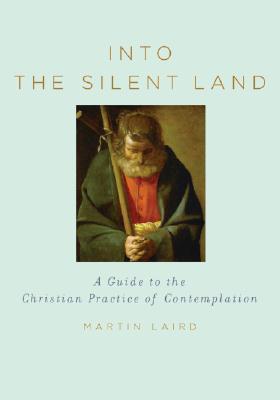
Book Review: Introduction to Christian Worship

This book – Introduction to Christian Worship (Third Edition) by James F. White – is an academic book elucidating the how-and-why of how Christian church services are organized, how the structure of church services have developed and changed over the centuries (i.e., pastors, liturgists, interested congregants, academics, and religious historians).

This book covers every aspect of the Christian liturgy – both in minutia and comparative details on how (and why) Christian church services (and other aspects of Christian worship such as Christian Initiation, baptism, weddings, and anointing of the sick) are the same across denominations as well as detailed discussion of how various aspects of church liturgy vary among denominations. The history of how church liturgy developed over the centuries is widely covered throughout the book. The wide breadth – and detail – of knowledgeable insight demonstrate many years of comparative religious study by the author (he was, after all, an academic).

Among the very readable insights of this book is an interesting point about the Bible readings that many denominations hear read at church on Sunday (page 75 of the third edition). James White informs readers that the Catholic church developed its’ current cycle of biblical readings read at mass after Vatican II. Many Catholics know of the three-year cycles of readings known as years A, B, C (there is a two-year cycle for the readings at weekday masses); White informs readers that many Protestant denominations also adopted the same reading cycle for weekend services – meaning there is a broad level of uniformity among many denominations of which Bible passages are heard each Sunday (news to me! I knew that several denominations – such as Episcopalians, Anglicans, Presbyterians, perhaps Lutherans and Methodists – read many of the same readings at church on the same calendar as Catholics; this shared practice seems to be more uniform and widespread than I realized. Denominations that read these shared Bible readings each weekend read from “The Lectionary for Mass” for Catholics and “The Common Lectionary” for Protestants). This standardization of readings moved some Protestant pastors away from only reading self-selected Bible passages at church that supported the political views of pastors and/or their congregations.

James F. White’s Introduction to Christian Worship is an informative read for anyone interested in Christian liturgy.

Kim Burkhardt blogs at The Books of the Ages and A Parish Catechist (and a “Content Creator/Individual” member of the Association of Catholic Publishers). If you are a new visitor, it would be great to have you follow this blog (thank you!). If you know someone who would like this blog post, please share it with them (thank you!).
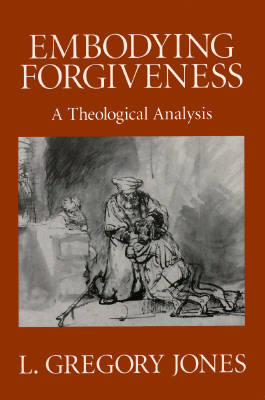
Book Review: David Benner’s Opening to God

I was hooked when I read the back cover of David Benner’s Opening to God: Lectio Divina and Life as Prayer.

I read these excerpts from the book’s back cover as poetry describing the best I have experienced in prayer: “Prayer is not just communication with God: it is communion with God. As we open ourselves to him, God does the spiritual work of transformation in us…….discover openness to God as the essence of prayer…..Move beyond words [in prayer] to become not merely someone who prays, but someone whose entire life is prayer in union with God.”

Okay, I haven’t yet gotten to living as “someone whose entire life is prayer,” but my prayer life has joyously moved beyond “words communicated to God” to prayer being a relationship – without the need for human language” (as I mention in several previous blog posts such as this one). In my case, such prayer was given to me as a grace.

I started reading this book last night. Happily, the book is living up to the book’s description – a descriptive book about the dynamics of prayer being a meaningful relationship with God. A worthwhile read about what prayer can be and is meant to be.

Kim Burkhardt blogs at The Books of the Ages and A Parish Catechist. If you are a new visitor, it would be great to have you follow this blog (thank you!). If you know someone who would like this blog post, please share it with them so they can subscribe (thank you!).

Book review: Daily Strengths for Daily Needs

Thank you to The Books of the Ages friend Karen Chartier for this book review. Much appreciated!

Book Review: Daily Strengths for Daily Needs

Mary W. Tileston

The Family Inspirational Library

Copyright 1928

Mary Tileston’s book Daily Strengths for Daily Needs offers a compilation of quotes from thoughtful, spiritual thinkers throughout the ages, from those found in the Bible to R.W. Emerson, to Marcus Antoninus, to George Elliot, to St. Frances de Sales — and scores of others.

Published first in 1884, it remains pertinent to the present. ‘In these days of great emotion and radical changes, we need the steady, persistent and refreshing inspiration of spiritual thoughts, which, entering the texture of our life in the morning, will guide and refresh us through the day, or, in the evening, give a sense of confidence and peace.’ opens the preface, and both the need and the outcomes outlined are relevant.

I was given this book by a friend and have been inspired by it throughout the year. I highly recommend it. Below are examples of quotes of Tileson’s book.

The one who will be found in trial capable of great acts of love, is ever the one who is always doing considerate small ones.          F. W. Robertson

A man is relieved and gay when he has put his heart into his work and done his best; but what he has said or done otherwise, shall give him no peace.                   R. W. Emerson

We may, if we choose, make the worst of one another.  Everyone has his weak points; everyone has his faults; we may make the worst of these; we may fix our attention constantly upon these.  But we may also make the best of one another.  We may forgive, even as we hope to be forgiven…By loving whatever is loveable in those around us, love will flow back from them to us, and life will become a pleasure instead of a pain; and earth will become like heaven; and we shall become not unworthy followers of Him whose name is Love.                      A. P. Stanley

Book Reviewer: Karen Chartier

The Tradition of Catholic Prayer: Book review, reflections

In their book The Tradition of Catholic Prayer, The Benedictine monks of Saint Meinrad Monastery (editors: Christian Raab and Harry Hagan) bring us a rich and rewarding read. When we want to read about prayer, it’s natural to want to turn to monks!

The depth and breadth of this book are summarized well on the book’s back cover, beginning with the following sentence: “Catholics have a rich and ancient prayer tradition that informs contemporary practice.” No wonder that people looking to deepen their prayer life look – among other places – to the Catholic Church. The variety of Catholic prayer experience and the historical context for this “rich and ancient prayer tradition” are covered engagingly in this very readable book. It’s worth a read for anyone looking to deepen their prayer life; it has helped nourish my ever-present hunger to sustain an rich and deep prayer life.

Kim Burkhardt blogs at The Books of the Ages. and at A Parish Catechist.

Living in the Presence (Tilden Edwards): book review

I came upon Tilden Edwards’ Living in the Presence perhaps five or six years ago in a Little Free Library. It immediately became part of my lectio divina reading on contemplative prayer. Lectio divina refers to prayerful, reflective reading of scripture; I sometimes read non-scriptural books in much the same way.

I had been gifted a state of contemplative prayer starting in October, 2016. In the period that followed, I actively – in a reflective way – read a good number of books on contemplative prayer. Living in the Presence was among these books; it provided an ample amount of nourishment for my prayer journey.

This book also brought to my attention an organization founded by the book’s author, Shalem Institute for Spiritual Formation. While Living in the Presence gave me much nourishment as I read and re-read the book, finding that groups such as the Shalem Institute exist provided me with a good amount of hope.

A valuable read for individuals who want to nurture contemplative prayer.

Kim Burkhardt blogs at The Books of the Ages and A Parish Catechist .